
What Happens When Mobile Games Shut Down?
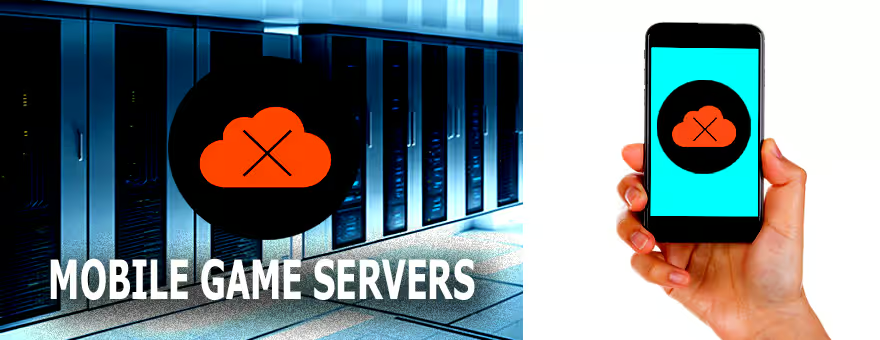
Today, many mobile games, particularly those with multi-player options, cannot be just downloaded and conveniently played offline. They, like the multitude of other online games exists on game servers, and when a mobile game like this is shutdown, the game doesn't just vanish from an online game or app store but triggers a multiple-staged reaction that affects the developer, the players, and the market it currently exists on. Many of today's Mobile Games are not like the old games where you do a one time purchase, you download, and you play, with it staying on your device as long as you want it to.
The overlaying of the online global information structure, the Internet on daily life, has created its own system of accessibility and ownership when it comes to content and information, and Mobile Games today, are (generally) very much governed by this. So, unless a Mobile Game is a one-time purchase affair with no need for any online interaction whatsoever, then the gamer can simply treat it like a game cartridge bought and plugged into one's Atari 2600 in the early 80s. Otherwise, let's examine the stages involved with an active server-based current-day Mobile game shutdown.
We Are Going Permanently Offline
Nowadays, when a modern online mobile game and even the one-time purchase games will no longer be available, the developers and publishers will have to publish a "Sunset Announcement", weeks or months in advance. Yanking out the game impromptu is not only unethical, but can lead to a legal mess as well. So they announce it and provide ample time for their customers to process the shock of no longer being able to play the game online.
To start with, the game's In-App Purchases will be disabled to prevent current players from buying currency they can no longer use. Then Developers would often flood players with “Free Premium” currency, High-level Items, or huge Experience Boosts so that remaining players can experience the end-game content. Then the game is pulled out of the App Stores and delisted to prevent new players from downloading it.
Server Shutdown
When the shutdown date comes, and (for formal shutdowns) announcements have been made regarding the exact countdown time, the game server will finally and permanently go offline. Online Mobile Games rely heavily on server communications and operations for things like log-in credentials and verification, game logic calculations, in-game inventory management, data security and anti-cheating, and many more. All this stops, and the client app on the phone or tablet can no longer connect with the shutdown server leaving it a "dead app' on one's device.
Post-Shutdown Legal and Financial Issues
The financial reality of purchase in today's online gaming world is a frustrating one. Unlike in gaming yesteryears and going back to the Atari cartridge example, when you purchase a game back then on cartridge, cassette tape, floppy disks, or CD/DVDs, the physical "game product" is yours. Even if manufacturing of said game stops, if you still have a machine to run your game on, then you can enjoy it all you want for Nostalgia's sake.
When you purchase online-based games today, if they send you a client you can store and backup and play offline, then good. Most however simply provide you a temporary license to use the digital content while it is available online. Once the server shuts down, that license expires and generally, developers and publishers do not refund to or compensate players for money spent months or years prior to the shutdown. Only games that have just started operating (like in the case of Sony Concord) are refunded accordingly through the platform it was distributed with, Steam (PC), Apple, or Google (Mobile).
Preservation and the Gaming Community
The reality is that massive and worldwide debates on digital preservation has been going on for some time now. The cry for the traditional way or at least a modern-day equivalent to truly owning the game that one bought is ongoing throughout social media and gaming industry circles. Gamers want ownership to their games, online or otherwise, and game preservationist organizations are currently working on means and ways to legalize this ownership and abhorrence to the common-day practice of simply leaving an online game purchaser in the dark in the aftermath of a shutdown.
Regardless, some passionate gaming communities refuse to let their favorite online game fade-away into oblivion and those in the technical know-how engage in reverse-engineering to save them. The legality ends up as a case-to case basis depending on the copyright holder of the game. City of Heroes (for PC) continues to operate as brought back by loyal fans with the blessing of the game’s publisher NCSoft, and this is only one example.
To this, some dedicated gamer communities engage in Data Packet Sniffing where players record the data packets being sent between mobile client and server before the server finally shuts-off. The recorded data is then used to build custom, fan-made servers, to keep the game going. Finally, tech fans end up hacking the game client bypassing server checks entirely, turning it into a local offline mobile game.
It should be stressed that despite ongoing efforts in gaming preservation, gaming fans and community servers should obtain legal permission from the game’s copyright holders just as the community of City of Heroes did. Sadly, in general, the current-day gaming reality remains, when a game server be it for PC, Console, or Mobile Gaming is shutdown, years of player progress and community friendships can be lost in an instant, leaving behind a useless Dead App icon on the mobile screen.